Jetzt Anmelden
Reisearten Destinationen Über ASI
Wunschliste

Die ASI Wunschliste

Klicke auf das und deine Lieblingsreisen werden in deiner Wunschliste gespeichert.

Du kannst dann deine Liste jederzeit mit deinem Reisepartner teilen und gemeinsam Reisen aussuchen.

+49 (0)30 318 77 933 60
Alle 13 Bilder Anzeigen

Classic Japan

Rundreise internationale Kleingruppe

Zertifizierter Partner
Reisejahr auswählen:
Reisecode
EPIPCJKJ0000
Gruppengröße
min. 1 / max. 12
Sprache
Englisch
Dauer
11 Tage
Altersbeschränkung
von 15 bis 99

ab € 4.158,– p.P.

Termine Anzeigen

Highlights

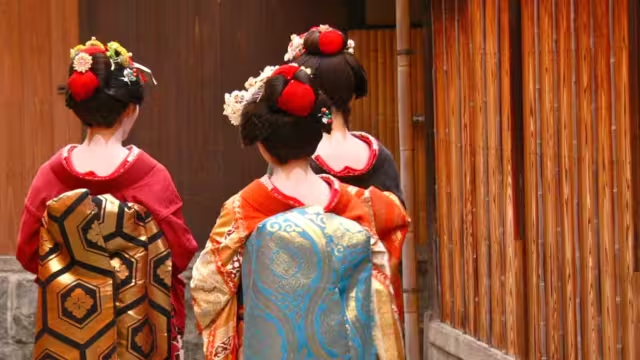
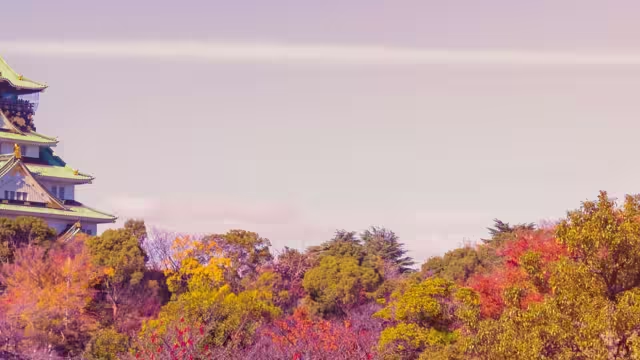
  • Discover Japan's most iconic city sites, from the geiko (geisha) district and Edo-period Nijo Castle in Kyoto to the temple district and contemporary highlights of Tokyo.
  • Learn more about the sobering past of Hiroshima at the memorial park, museums and monuments dedicated to the victims – these sites now advocate for world peace, serving as a reminder of the devastation of war.
  • Feast on okonomiyaki – Japan’s signature savoury pancake of egg, cabbage, soba noodles and meat or seafood – at an included dinner in Hiroshima.
  • Meet the locals over a home-cooked dinner during your stay in a ryokan (a traditional Japanese inn) in the mountain town of Tsumago – a village preserved from the Edo period.
  • Spend a night in Koya-san’s Shukubo Temple and learn about the customs of traditional Japanese accommodation as you share vegetarian meals with the monks who run the lodgings.
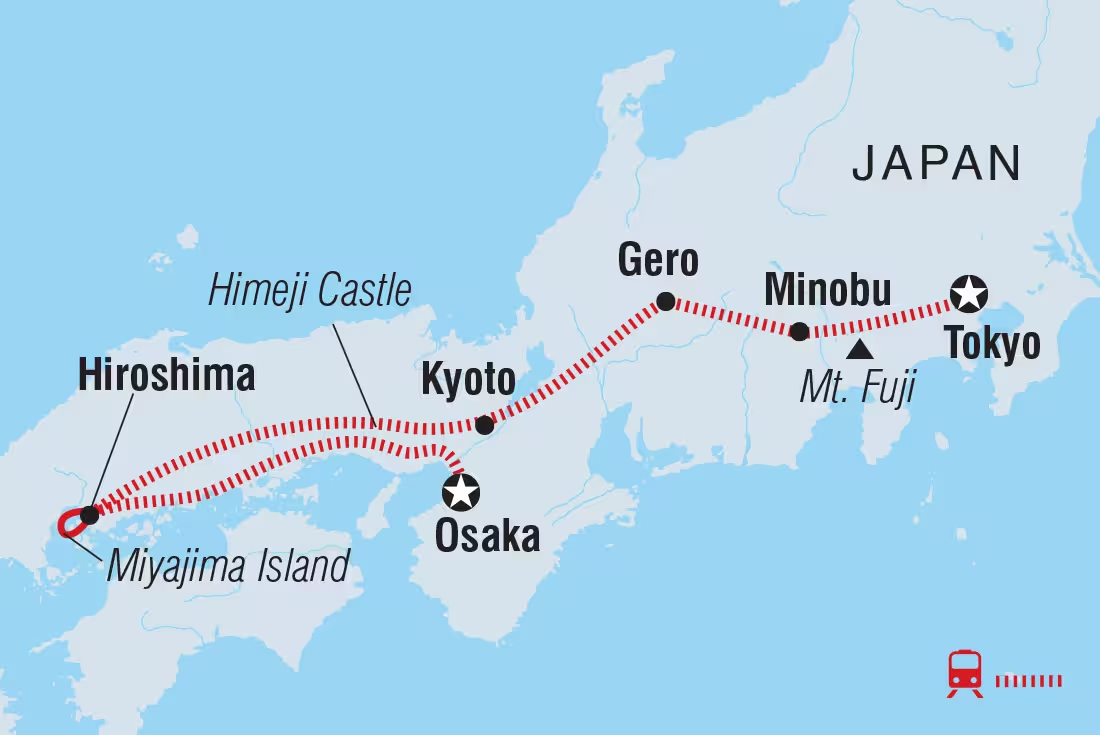
Map

Nachhaltigkeit

Diese Reise wird von einem zertifizierten Reiseveranstalter durchgeführt.

Mehr Erfahren

ab € 4.158,– p.P.

Termine Anzeigen

Reisebeschreibung 2026

Steeped in centuries of tradition and full of culinary prowess, Japan is awash with sights to see and histories to uncover. From Kyoto to Tokyo, you’ll spend 11 days exploring the heart of Japan. Stay in a monastery in Koya-san, walk part of the Nakasendo Highway, learn about the sobering history of Hiroshima and cruise along the Sumida River in Tokyo. Be tempted by tempura, savour your sushi and sip shochu as you explore the endless diversity of Japan with your small group, all with a local leader who knows all the best places by your side.

Reiseverlauf 2026

Alle Reisetage Einklappen
  1. Tag 1

    Kyoto

    <
    Konnichiwa! Welcome to Kyoto. Your adventure begins with a welcome meeting at 6 pm. If you have some free time, step out onto the streets for your first taste of this beautiful city. Originally called Heian-kyo (literally 'peaceful and tranquil capital'), Kyoto was named the national capital by Emperor Kammu in AD794. The city had its golden age as Japan’s capital for over 1000 years before the emperor and government were moved to the new capital of Tokyo. After the meeting tonight, perhaps head out for your first taste of traditional Japanese food. As the former millennium-long home of the imperial kitchen, Kyoto is known as the centre of Japanese culinary tradition, so you should begin this trip with a delicious meal!
    It’s very important that you attend the welcome meeting as we will be collecting insurance details and next of kin information at this time. If you are going to be late, please let your travel agent or hotel reception know. Ask reception or look for a note in the lobby for more information on where the meeting will take place.
  2. Tag 2

    Kyoto

    <
    You’ll begin the day with a visit to some of Kyoto’s most important sites. Visit the opulent Nijo Castle – home to the Tokugawa Shoguns who ruled the country during the Edo period. Check out the ‘nightingale floors’ of Ninomaru Palace, which squeak to warn of intruders (like otherwise silent ninjas). From the castle, you’ll take a short bus ride to Ryoan-ji – perhaps Japan’s most famous Zen garden – where carefully placed rocks sit in an immaculately raked bed of gravel. Also nearby is the partially gold leaf-covered Kinkakuji Temple, immortalised in Yukio Mishima’s novel 'The Temple of the Golden Pavilion'. This evening, take a step back in time on a walk through the narrow streets of Kyoto's charming Gion district. An entertainment district and the centre of geiko culture, Gion comes alive at night. If you’re lucky, you might spot geiko (geisha) or maiko (apprentice geisha) in their elaborate dress and make up. If you’ve got the budget, perhaps attend a tea ceremony at one of the district's teahouses or splash out on a kaiseki meal in a ryotei (small restaurants serving traditional multi-course cuisine).
    Tea ceremonies in Japan tend to get fully booked well in advance. If you are interested in experiencing one, we highly recommend making your booking directly as early as possible to secure your spot.
  3. Tag 3

    Kyoto

    <
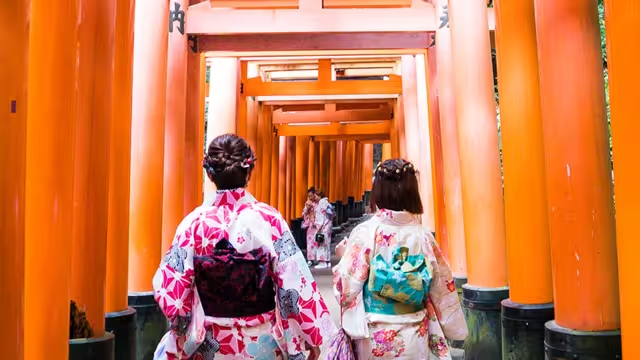
    Today is a full free day and there’s so much for you to explore. With its many cultural landmarks, historical sites, an abundance of traditional arts and a rich literary history, Kyoto is regarded as the cultural heart of Japan. Maybe visit the Fushimi Inari Shrine, famous for its thousands of torii (gates) that line a path up Mt Inari. Kyoto is a city that lends itself to walking – it’s highly recommended you take a gentle stroll through the nearby eastern hills along the Philosopher’s Path that links Ginkaku-ji (the Temple of the Silver Pavilion) with Nanzen-ji Temple. This walk can be extended south through well-preserved Old Town areas to Kiyomizu-dera (Temple of Pure Water) from which there’s an acclaimed view across a wooded gorge toward Kyoto. Also recommended, for those visiting in April, is a visit to the theatre for a presentation of Miyako Odori (the Cherry Blossom Dance) performed by elaborately dressed geikos and maikos. Close to Kyoto station, you'll also find the architecturally impressive Higashi Honganji Temple and Sanjusangendo Temple, home to 1001 gold statues of Kannon. In the late afternoon, you might like to return to the Kawaramachi or Shijo Dori area of central Kyoto to browse the shops or enjoy dinner in one of the many restaurants in these buzzing districts.
  4. Tag 4

    Koya-san

    <
    Take a train into Koya-san, spotting as many of the 120 temples dotted around the region as you can. Founded in the 8th century by the Buddhist saint Kobo Daishi, Koya-san has been the centre of Shingon Buddhism for over 1200 years. The last leg of the train journey takes you through some of Japan’s finest scenery, on a mountain road rising through the clouds, 915 m above sea level. The most impressive sight on Mt Koya is Japan’s largest cemetery – Okunoin – the resting place of many of Japan's most famous people. Some 200,000 stone statues, wooden totems and sometimes unusual memorials (a rocket marks the site of a mausoleum for the workers of an aerospace company) lie throughout this moss-laden forest. After visiting the mountain’s sights, make your way to the comfortable Shukubo (temple lodging) for the night. Here, you might interact with some of the monks that run the lodgings and learn about the customs of traditional Japanese accommodation. Tonight, experience a taste of shojin ryori – Buddhist vegetarian cooking made with fresh, simple ingredients.
    Your travel time today will be approximately 4.5 hours. Today, we will send one piece of luggage to Hiroshima for you. You will need a small overnight bag for your stay in Koya-san as you will not have access to your luggage again until Day 5.
  5. Tag 5

    Hiroshima

    <
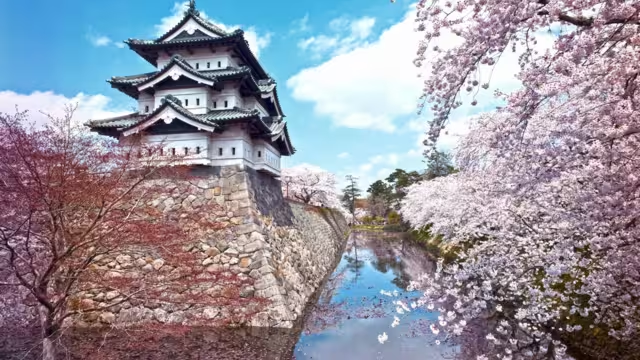
    Return by cable railway to Gokurakubashi, then travel to Osaka to board your first shinkansen (bullet train), headed for Hiroshima – you’ll reach speeds of up to 270 km per hour! As you speed south, stop to visit Japan’s most impressive samurai castle at Himeji. The building, which has survived earthquakes and war since the mid-16th century, was restored to its full glory in 2015. The moats, baileys, towers and walled alleyways were ingeniously designed to trick attackers – perhaps so intimidatingly that they were never tested. Explore the castle that was once home to over 10,000 samurai families and look out over the city from the seventh floor. Continue to Hiroshima and join your group for a dinner of okonomiyaki – Japan’s signature savoury pancake made of batter, cabbage, egg, customisable toppings like seafood, meat or vegetables and the traditional Hiroshima-style addition of yakisoba noodles.
    Your travel time today will be approximately 5 hours.
  6. Tag 6

    Hiroshima

    <
  7. Tag 7

    Tsumago

    <
  8. Tag 8

    Matsumoto

    <
  9. Tag 9

    Tokyo

    <
  10. Tag 10

    Tokyo

    <
  11. Tag 11

    Tokyo

    <
Reiseverlauf als PDF downloaden
Reise teilen

Leistungen 2026

  • Hotel (8 Nächte), Tempelaufenthalt (1 Nacht), Ryokan (1 Nacht)
  • Kyoto - Ryoanji Zen Garten
  • Kyoto - Schloss Nijo
  • Kyoto - Kinkaku-ji (Goldener Pavillon)
  • Kyoto - Gion Bezirk Spaziergang
  • Koya-san - Okunoin-Friedhof
  • Himeji - Burg Himeji
  • Hiroshima - Friedenspark & A - Bombenkuppel
  • Hiroshima - Friedensmuseum
  • Hiroshima - Miyajima Insel
  • Tsumago - Nakasendo Wanderung
  • Matsumoto - Rundgang
  • Tokio - Sensoji-Tempel
  • Tokio - Sumida Flusskreuzfahrt
  • Tokio - Hama Rikyu Garten
  • Kyoto - Ryoanji Zen Garden
  • Kyoto - Nijo Castle
  • Kyoto - Kinkaku-ji (Golden Pavilion)
  • Kyoto - Gion District walk
  • Koya-san - Okunoin Cemetery
  • Himeji - Himeji Castle
  • Hiroshima - Peace Park & A - Bomb Dome
  • Hiroshima - Peace Museum
  • Hiroshima - Miyajima Island
  • Tsumago - Nakasendo Walk
  • Matsumoto - walking tour
  • Tokyo - Sensoji Temple
  • Tokyo - Sumida River Cruise
  • Tokyo - Hama Rikyu Garden
  • 10x Frühstück
  • 3x Abendessen

Unterkunft 2026

Hotel (8 nights), Temple Stay (1 night), Ryokan (1 night)

Termine

  1. Anreise


    Abreise


    Preis


Preise gelten ab/bis Kyoto, Japan
Reise teilen
Reise mit E-Mail teilen Reise auf Twitter teilen Reise auf Facebook teilen Reise auf Pinterest teilen

Häufig gestellte Fragen

Wichtige Informationen zu deiner Reise

Diese Reise ist für Menschen mit eingeschränkter Mobilität nicht geeignet.

Reiseversicherung für deine ASI Reise
Sorgenfrei unterwegs – mit den Reiseversicherungen der HanseMerkur. Ob Stornierung, Krankheit oder Reiseabbruch: Mit dem passenden Versicherungsschutz bist du auf deiner ASI Reise optimal abgesichert.

Die Tarife sind flexibel konfigurierbar. Abschluss und Beratung erfolgen direkt über die HanseMerkur. Mehr Informationen zum Thema Reiseversicherung findest du unter asi-reisen.de/reiseversicherung.

Nachhaltigkeit

Diese Reise wird von einem zertifizierten Partner durchgeführt

Mit einem Nachhaltigkeitszertifikat wird das Engagament eines Unternehmens auf sozialer, ökonomischer und ökologischer Ebene anerkannt. Dieses Unternehmen hat eine von GTSC anerkannte Zertifizierung und trägt somit aktiv zur nachhaltigen Entwicklung im Tourismus bei.

Mehr Erfahren

Mehrwert abseits der Reise leisten

Unterstütze ausgewählte Projekte in unseren Reisedestinationen über unsere Spendenplatform. Damit 100% deiner Spende beim Projekt ankommt, übernehmen wir alle Transaktionskosten.

Zur ASI Spendenplattform

So kannst du zu mehr Nachhaltigkeit auf deiner Reise beitragen

Auch du kannst aktiv dazu beitragen, deine Reise nachhaltiger zu gestalten. Von Vorbereitung auf deine Reise, bis hin zur Unterstützung von lokalen Unternehmen im Reiseland – es gibt viele Möglichkeiten

Mehr Erfahren